
Apple CEO succession is being covered as a leadership story. That framing is too narrow. The more important question is architectural. Apple announced on 20 April 2026 that Tim Cook will become executive chairman and John Ternus will become chief executive officer on 1 September 2026. This is not just a routine executive change. It places a long-serving hardware engineering leader at the centre of decision-making at a time when AI capability, silicon planning, device form factor, privacy architecture, and platform integration are converging again.
That distinction matters because Apple does not compete like a pure software platform company. Its strength comes from the way it coordinates silicon, industrial design, operating systems, developer frameworks, device behaviour, and manufacturing scale into a single system. When a company built on that model chooses a hardware leader rather than an external operator or a finance-led successor, it reveals where the board believes the next competitive pressure will sit. In this case, the signal is clear. Apple appears to believe the next phase of competition will be won through product execution and system coherence rather than through messaging alone.
2026 Update: Apple, Intel Foundry and the AI Chip Strategy Question
Apple’s CEO succession story is no longer only about who leads the company after Tim Cook. It now sits within a broader semiconductor strategy question: how Apple secures advanced chip capacity, protects supply chain resilience, and prepares for AI-capable devices that depend on tighter hardware-software integration.
Recent reports make this shift more important. Reuters, citing the Wall Street Journal, reported that Apple and Intel have reached a preliminary chip-manufacturing agreement. The report framed the potential deal as a boost for Intel’s contract manufacturing business and part of a wider US effort to strengthen domestic semiconductor production. EE Times also described a potential Apple-Intel Foundry partnership as a major external foundry test for Intel and a strategic signal for US chip manufacturing.
For Apple, the important point is not a simple return to Intel in the old Mac processor sense. The stronger issue is optionality. Apple still depends on advanced silicon, high-volume manufacturing, packaging capability, power efficiency, battery behaviour, privacy architecture and device-level integration. As AI moves closer to the device, Apple’s ability to control silicon planning and manufacturing routes becomes a competitive advantage, not just an operational requirement.
This is why John Ternus’s hardware background matters. Apple’s next phase is likely to be judged by how well it turns AI capability into shipped products, not only by how loudly it talks about AI. Bloomberg has reported that Ternus is a central candidate in Apple’s leadership succession and that his hardware organisation oversees devices that generate most of Apple’s revenue. That makes the succession question directly relevant to Apple’s AI chip strategy, product architecture, and supply chain execution.
The strategic reading is clear. Apple’s leadership direction, the reported Intel Foundry discussion and the wider AI chip race all point to the same pressure: future advantage will depend on engineering execution across silicon, software, manufacturing and system-level constraints. For semiconductor teams, this is the same pattern visible across the industry. AI is changing workflows and product expectations, but it is also increasing the need for strong engineering judgement, verification discipline and supply-chain awareness.
For engineering teams, the same shift is evident across the semiconductor sector: AI is changing workflows, but it does not eliminate the need for domain expertise, as discussed in Alpinum’s analysis of whether AI will replace semiconductor engineers.
Apple’s CEO Succession Is Really a Hardware and Product Architecture Decision
John Ternus has spent more than two decades inside Apple’s engineering organisation. He joined Apple in 2001 and most recently served as senior vice president of Hardware Engineering. That matters because this is the part of the company that has to solve real design constraints: thermal headroom, battery envelope, materials, manufacturability, silicon capability, mechanical compromise, and release timing. A leader shaped in that environment tends to understand strategy through shipped systems rather than through organisational abstraction.
This is why the appointment should not be described as symbolic. In large technology firms, executive backgrounds influence what problems reach the top table fastest. Operations-led leadership often sharpens efficiency, cost control, supply resilience, and portfolio discipline. Product-engineering-led leadership tends to focus on roadmap coherence, platform differentiation, and the speed at which hard technical constraints are resolved. Apple still needs both. This move suggests that the board now sees the harder strategic problem on the product side of the equation.
The reported Apple–Intel foundry discussions also show how semiconductor strategy is increasingly tied to AI infrastructure, manufacturing resilience, and supply-chain control.
Why John Ternus Fits Apple’s AI Chip and Hardware Strategy Problem
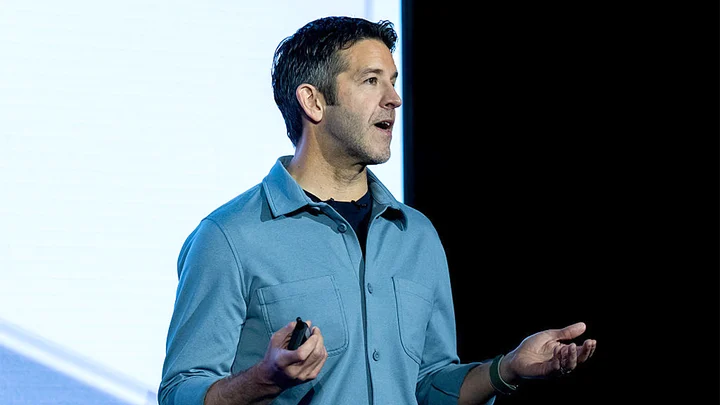
Fig 1: Ternus will take over as chief executive in September for Tim Cook, who turned Apple into a $4 trillion tech colossus during his 15-year run after the death of co-founder Steve Jobs. Source: Adam Gray/Bloomberg via Getty Images
That reading becomes stronger when Apple’s current technology direction is taken seriously. Apple Intelligence is not presented as a detached software layer. Apple describes it as integrated into the core of iPhone, iPad, Mac, Apple Watch, and Apple Vision Pro, using on-device processing where possible and Private Cloud Compute on Apple silicon for more complex requests. That is a hardware-software systems strategy, not just an AI branding exercise. It depends on latency, memory, power, privacy guarantees, and compute placement across the device and cloud.
When the industry talks about AI as a platform shift, the useful question is not whether AI is arriving. It is how organisations absorb it into existing product and engineering structures without creating new execution risk. That is the same discipline explored in What Does 2026 Look Like for AI, which examines how current AI trends become operating constraints rather than surface-level excitement.
Apple’s transition also highlights a recurring industry problem. Companies want AI impact, but they often lack a controlled path from experimentation to deployment. That is the same issue addressed in AI in Design Verification: A Safe Pilot. The connection is not superficial. In both cases, success depends on where AI is inserted into the engineering flow, how risks are bounded, and how teams avoid treating tooling change as strategy.
Apple’s AI Hardware Strategy Now Has to Prove Itself in Shipped Products
The practical question now is not whether Apple can speak credibly about AI. It is whether Apple can embed intelligence into products in a way that strengthens the value of the device stack. That means answering engineering questions rather than marketing ones. Where does inference run? What stays on the device? What spills into the cloud? How does privacy survive that boundary? How do battery, thermals, and memory bandwidth constrain what intelligence can actually do in a handheld or wearable system?
Apple’s advantage has always depended on integrating intelligence with hardware, operating system behaviour, and product constraints. The same applies to verification and integration. Apple’s competitive edge does not come from isolated features. It comes from how components behave as a single system. Apple’s product model is inseparable from the interaction between device hardware, firmware, operating systems, and application behaviour.
Why This Is Not a Rejection of Tim Cook’s Supply-Chain Apple

Fig 2: Apple’s John Ternus and Tim Cook. Source: Apple
It would be a mistake to read this transition as a rejection of the Cook era. Apple’s board is not dismantling the operating machine Cook built. The handover keeps things continuous while shifting the operational focus closer to product and hardware judgment. That is a lower-risk transition model. Apple still has to manage a global supply network, a huge installed base, a tightly coupled services ecosystem, developer expectations, and competitive pressure in the AI-enabled devices market.
From an engineering and programme-delivery perspective, that is a rational succession design. It keeps continuity in governance while allowing a more product-centred operating rhythm.
For readers interested in how these questions translate into practical engineering execution, Alpinum’s coverage from verification planning through coverage closure offers a useful, complementary view of how complex systems move from intent to sign-off discipline.
Why Apple’s Hardware Pivot Matters Beyond Apple
For engineers, system architects, verification leaders, and programme owners, the lesson is broader than Apple itself. Leadership transitions in integrated technology companies often reveal where the next bottleneck sits. When a board moves a hardware engineering leader to the top, it usually means that future competition will depend on turning architectural intent into reliably shipped systems under real constraints.
That is why John Ternus should be read as a strategic pivot. Apple is not simply replacing one executive with another. It is moving product and hardware judgment closer to the final decision point at a time when intelligence, silicon, and device design are converging again. If that interpretation is correct, Apple’s next phase will be defined less by how loudly it talks about AI and more by how effectively it embeds intelligence into products people actually use.
References
[1] Reuters, “Apple, Intel reach preliminary chip-making deal, WSJ reports,” May 2026.
[2] EE Times, “Apple-Intel Foundry Deal Could Reshape U.S. Chip Manufacturing,” May 2026.
[3] Bloomberg, “Apple’s John Ternus Profile: The Likely Successor to Tim Cook,” Apr. 2026.
Continue Exploring
For readers assessing how hardware-led strategy and AI integration translate into real engineering execution, the following resources provide structured next steps: https://alpinumconsulting.com/services/ai-in-dv/adoption/
- For a structured view of how AI can be introduced into complex engineering environments, including integration with existing workflows and decision-making processes: AI adoption in engineering workflows
- For system-level design and verification approaches that ensure product reliability, integration coherence, and measurable delivery outcomes: Design and verification capability
- For practical implementation of testing strategies across embedded systems, including device-level validation and system integration: Hardware–software integration and validation
Further technical context
For additional insight into how these challenges are addressed at the system scale:
- AI strategy and engineering constraints
- AI integration within verification workflows
- System-scale programme risk in verification
For teams moving beyond high-level strategy, the next step is not large-scale transformation. It is a controlled, engineering-led implementation aligned to real product constraints, with clear ownership, measurable outcomes, and system-level accountability.

Written by : Mike Bartley
Mike started in software testing in 1988 after completing a PhD in Math, moving to semiconductor Design Verification (DV) in 1994, verifying designs (on Silicon and FPGA) going into commercial and safety-related sectors such as mobile phones, automotive, comms, cloud/data servers, and Artificial Intelligence. Mike built and managed state-of-the-art DV teams inside several companies, specialising in CPU verification.
Mike founded and grew a DV services company to 450+ engineers globally, successfully delivering services and solutions to over 50+ clients.
Mike started Alpinum in April 2016 to deliver a range of start-of-the art industry solutions:
Alpinum AI provides tools and automations using Artificial Intelligence to help companies reduce development costs (by up to 90%!) Alpinum Services provides RTL to GDS VLSI services from nearshore and offshore centres in Vietnam, India, Egypt, Eastern Europe, Mexico and Costa Rica. Alpinum Consulting also provides strategic board level consultancy services, helping companies to grow. Alpinum training department provides self-paced, fully online training in System Verilog, UVM Introduction and Advanced, Formal Verification, DV methodologies for SV, UVM, VHDL and OSVVM and CPU/RISC-V. Alpinum Events organises a number of free-to-attend industry events
You can contact Mike (mike@alpinumconsulting.com or +44 7796 307958) or book a meeting with Mike using Calendly (https://calendly.com/mike-alpinum-consulting).
Stay Informed and Stay Ahead
Latest Articles, Guides and News
Explore related insights from Alpinum that dive deeper into design verification challenges, practical solutions, and expert perspectives from across the global engineering landscape.