AI Adoption Partner for Semiconductor Verification Teams

Adopt AI with a partner that understands semiconductor verification, IP sensitivity, workflow discipline, and toolchain complexity.

Alpinum is an independent partner helping semiconductor verification teams adopt Artificial Intelligence in real production workflows. Built on decades of hands-on AI and verification leadership from CEO Dr Mike Bartley, we provide unbiased guidance, engineering support, and training to reduce risk, protect IP, and deliver measurable ROI from AI adoption.
Start with a FREE “AI in DV” Capability Assessment to identify the right first step for AI adoption.

AI adoption in Semiconductor
Engineering Needs a Different Approach

Many organisations are now exploring AI across engineering and business functions. However, in semiconductor environments, that shift is more complex than in general software teams.

Verification and engineering groups work with sensitive design data, established EDA flows, strict review requirements, and delivery-critical processes. That means AI adoption has to be approached with more care, stronger governance, and clearer technical judgment.
Alpinum helps teams introduce AI in a way that is secure, practical, and measurable. We focus on workflow fit, engineering value, and disciplined rollout rather than broad experimentation without a path to production use.

Why Alpinum for AI Adoption

Alpinum combines strategic guidance with practical engineering support.

Our approach is built for organisations that need more than a general AI presentation. Clients typically need help answering questions such as:

  • Where can AI deliver measurable value in verification and engineering workflows?
  • Which use cases are safe, realistic, and worth piloting first?
  • How can AI be introduced without exposing proprietary RTL, logs, specifications, or internal engineering knowledge?
  • How should AI fit with existing EDA (e.g. Synopsys, Cadence, Siemens, and free tools) and internal tool environments?
  • What governance, review, and training are required before scaling adoption?

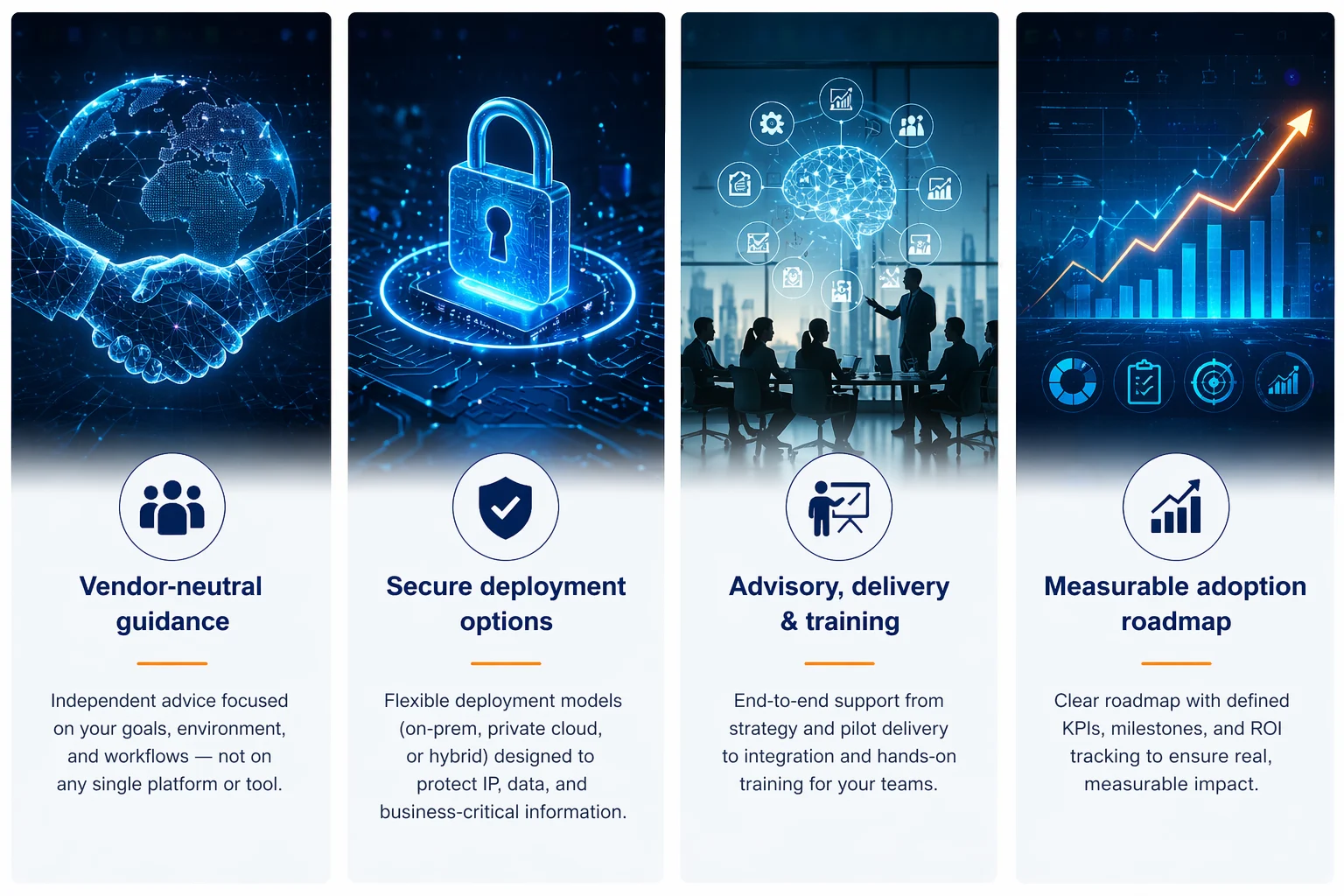
Alpinum supports this with: vendor-neutral guidance; AI, DV and engineering expertise and experience; and hands-on delivery support. We help clients assess opportunities, define secure deployment models, integrate AI into existing verification workflows, and build internal capability through practical training and enablement. We use our own as well as established industry tools. We also work with companies developing new tools, so we can stay ahead of this fast-moving landscape

Our positioning is not based on generic AI claims. It is based on production-oriented adoption, engineering fit, and measurable improvement.

“AI in DV” Capability Assessment for AI Adoption

Before recommending AI tools, pilots, or workflow changes, Alpinum begins with a FREE “AI in DV” Capability Assessment.

Using the Alpinum “AI in DV” maturity model, we undertake a short, structured assessment of your current capabilities across three key areas.

  1. AI capability focuses on your current experience with AI, including what tools or approaches are already in use and how widely they have been adopted across your engineering teams.
  2. Design verification capability examines your current DV environment, including efficiency challenges, bug escapes, late-delivery risks, verification costs, and the strategies, methodologies, and tools you employ, as well as how consistently they are applied.
  3. Improvement potential identifies where there is the greatest scope to improve verification efficiency and engineering outcomes, based on your current capability and maturity.

How the assessment is carried out

We conduct this assessment through a focused and practical engagement with your team.

This includes sharing a short online questionnaire with relevant engineers to capture a broad view of current workflows, tools, and challenges.

We also conduct targeted interviews with selected members of your team to gain deeper insight into verification practices, pain points, and opportunities for improvement.

Outcome of the assessment

The outcome is a clear, actionable report that:

  • Assesses your current AI and DV capabilities
  • Identifies key areas for improvement
  • Defines where AI can add practical verification efficiency
  • Recommends the most appropriate next step

Start your FREE “AI in DV” Capability Assessment

Get in touch with us today and explore how our multi-domain expertise can benefit your project!

Dr Mike Bartley: Pioneering Technology Adoption
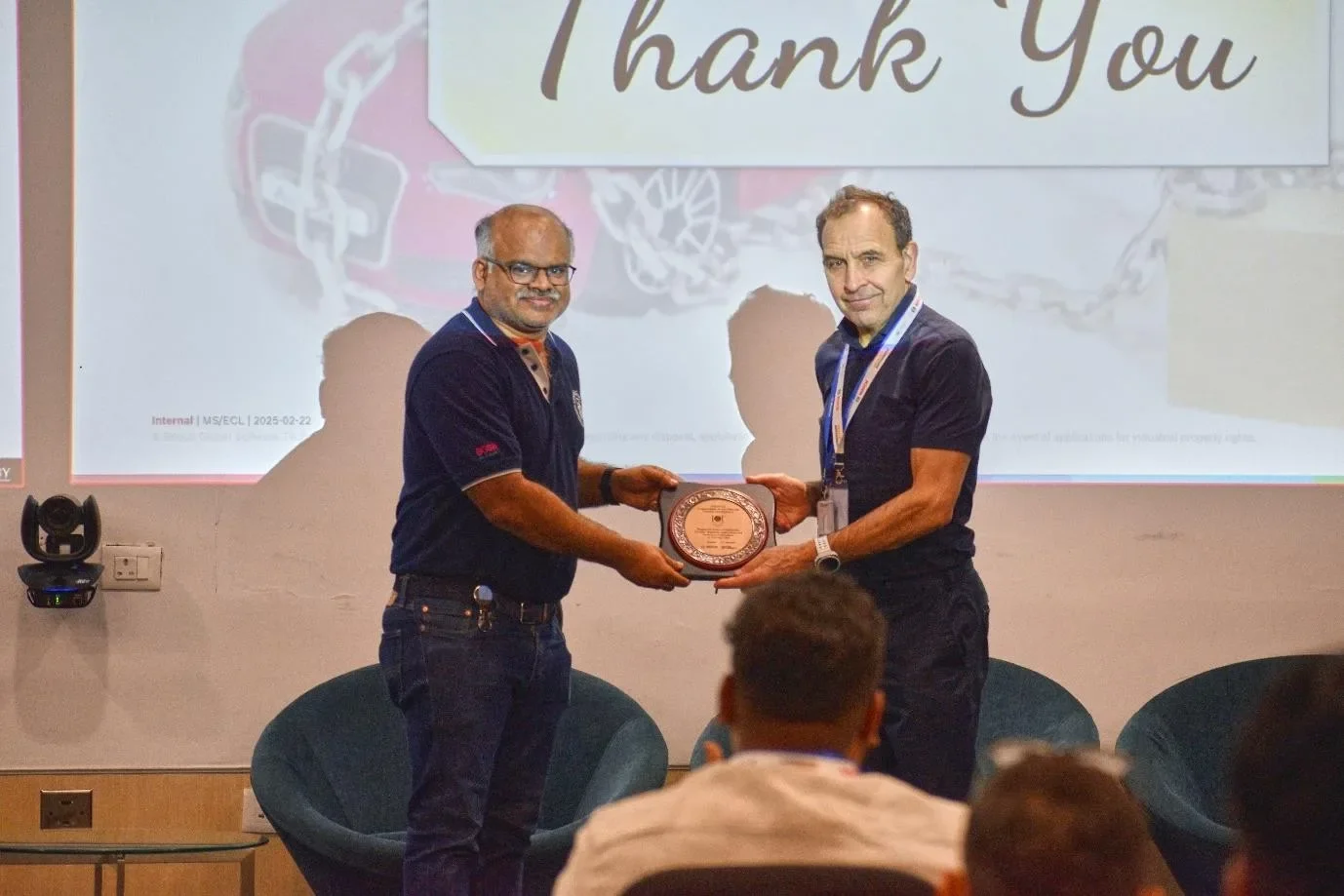
Alpinum’s approach is grounded in Dr Mike Bartley’s record of first-to-market execution, driving new verification and practical AI techniques into the semiconductor industry.

Highlights include:

  • Pioneering methodologies: Advanced formal verification and constrained-random verification adoption starting in 1994. Early adoption and advocacy of UVM
  • Early AI in verification: Introduction of Genetic Algorithms for verification in 1996, with continued practical monitoring and application of AI techniques since then
  • Enterprise rollouts: Deployment of equivalence checking at STMicroelectronics in 1997, followed by formal verification and constrained-random verification rollouts in 2000
  • Modern AI integration: Led recent AI application initiatives across Tessolve, including the development and deployment of multiple in-house AI tools for internal teams
  • Adoption leadership: Guided major engineering organisations through complex tool and methodology transitions since 1996.

Consultancy and Measurable Improvement

Dr Mike does not just recommend technology. He focuses on measurable outcomes. He has led process-improvement engagements that delivered quantifiable verification gains, including a five-year programme at Arm through his previous startup, TVS, as well as multiple shorter, high-impact programmes across other major semiconductor organisations.

What successful AI Adoption Should Achieve
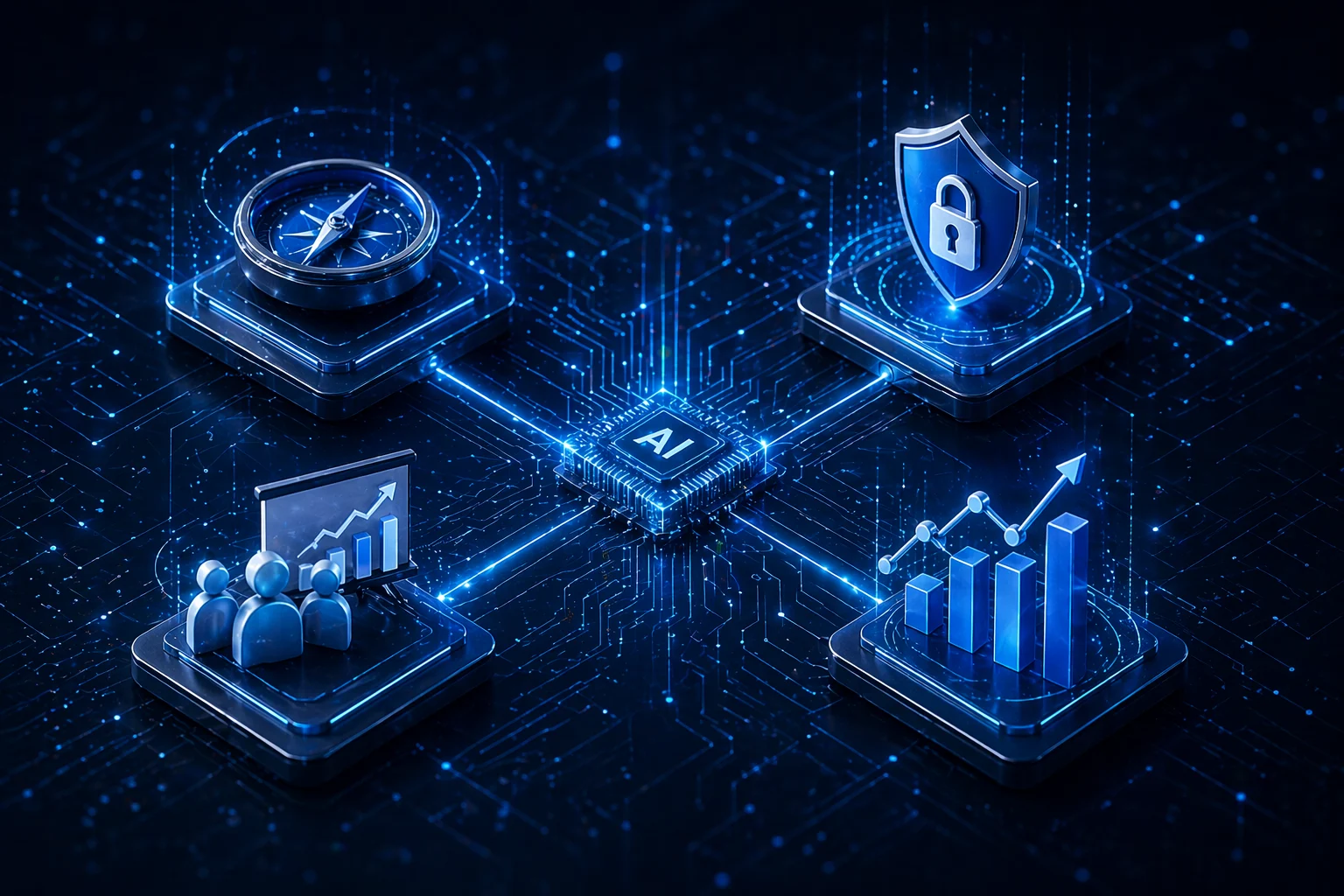
A strong AI adoption programme should improve the way engineering work is done.

Depending on the workflow, outcomes may include:

  • Faster analysis of specifications and engineering documents
  • Better structured verification planning inputs
  • Reduced manual effort in repetitive support tasks
  • Faster regression triage and debug preparation
  • More effective access to internal engineering knowledge
  • Clearer governance for AI-assisted work
  • Stronger evidence for rollout decisions and investment

The objective is not to force AI into every activity. It is to identify where it can improve execution without weakening engineering discipline.

From Assessment to Adoption

A structured path from understanding your current capability to delivering measurable AI impact in verification workflows.

High-value AI use cases in semiconductor verification

AI can help teams process large specifications, extract structured points, organise requirements, and prepare early verification inputs more efficiently.
AI can assist with planning structure, scenario identification, and first-pass organisation of verification intent, helping teams move faster while keeping expert review in place.
For suitable workflows, AI can help engineers prepare candidate assertions, identify missing checks, and improve traceability of intent across interfaces and behaviours.
AI can support repetitive engineering work, such as code explanation, boilerplate generation, documentation support, and productivity tasks related to verification environments.
AI can help cluster failures, summarise repeated issues, and accelerate first-pass review of large regression outputs so engineers spend less time sorting and more time solving.
AI can help connect coverage gaps back to features, scenarios, and planning intent, making closure discussions more focused and actionable.
Secure internal assistants can improve access to approved project knowledge, methodology documentation, and internal references without relying on public AI endpoints.

Contact for a FREE “AI in DV” assessment, or book a meeting with Mike using Calendly to discuss the right first step.

Get in touch with us today and explore how our multi-domain expertise can benefit your project!

What makes our approach different

AI adoption varies across environments shaped by IP sensitivity, workflow maturity, and sign-off discipline. Alpinum approaches adoption from that reality.
We are independent in how we evaluate tools, deployment options, and workflow choices. The goal is to fit AI to your environment, data, and goals rather than force your organisation around a fixed platform.
We do not stop at high-level recommendations. We help clients assess, pilot, integrate, and enable adoption so progress moves beyond discussion and into real workflows.
AI adoption in semiconductor organisations must take data security seriously. We help define secure local, private-cloud, hybrid, or on-prem AI approaches that protect proprietary RTL, netlists, logs, and engineering knowledge.
AI adoption must fit existing engineering environments. We help layer AI alongside established Synopsys, Cadence, and Siemens flows without disrupting proven sign-off practices.
Adoption does not scale if only a few people understand the tools. We provide practical programmes to support adoption among engineering, management, and IT/security stakeholders.
We define success metrics up front, including outcomes such as fewer simulation cycles, faster coverage closure, and reduced debug time, then track them through rollout.
Where appropriate, we can support fine-tuned or customised AI approaches based on codebases, regressions, and historical verification data to improve relevance and precision.

Practical AI adoption, not generic transformation language

Alpinum is positioned as an independent partner for semiconductor teams adopting AI in production workflows. That positioning is backed by strengths across engineering support, training, secure deployment, legacy flow integration, and measurable business value.

It is also backed by Dr Mike Bartley’s long record in rolling out new verification methodologies and practical AI techniques in the semiconductor industry. That matters because AI adoption in this sector is not a generic transformation exercise. It has to work within real design and verification constraints, protect IP, fit existing flows, and deliver measurable improvement.

Alpinum understands:

  • How semiconductor teams actually work
  • How AI adoption can fail operationally
  • How to structure a pilot properly
  • How to protect engineering governance
  • How to turn adoption into measurable outcomes

The Alpinum Execution Engine

Alpinum pairs strategic guidance with a delivery team that can implement, integrate, and enable AI end-to-end.

  • Engineering support: practitioners who have built and rolled out in-house tools and can help integrate AI into existing verification workflows
  • Training and enablement: practical programmes to support adoption across engineering, management, and IT or security stakeholders
  • Independent and unbiased: vendor-neutral guidance across tools and platforms to fit your constraints, data, and goals
  • Industry leadership: active contribution to the wider conversation through conferences and engineering engagement around verification and AI

AI in DV Insights and Resources

Fill in the form for a FREE “AI in DV” assessment, or book a meeting with Mike using Calendly to discuss the right first step.

We will contact you today or the next business day. All submitted information will be kept confidential.

Prefer direct email?
Write to mike@alpinumconsulting.com

Book a quick meeting with Mike:
https://calendly.com/mike-alpinum-consulting

    Related Engineering Capabilities

    Explore Alpinum’s core capabilities across verification, FPGA development, and AI-driven engineering workflows.

    Structured verification strategies, coverage closure, and sign-off confidence

    Prove correctness, reduce simulation effort, and improve verification depth.

    End-to-end FPGA development, verification, and system integration.

    Practical training for teams adopting new methodologies and AI workflows.

    Frequently Asked Questions

    AI adoption in semiconductor verification means introducing AI into real engineering workflows in a controlled way, with security, review discipline, workflow fit, and measurable objectives.

    A FREE “AI in DV” Capability Assessment is a short review of your current AI experience, DV capability, verification maturity, and improvement opportunities. Using Alpinum’s “AI in DV” maturity model, the assessment identifies where AI could improve verification efficiency and recommends practical next steps for pilot, integration, training, or wider rollout.

    Yes. AI adoption can be structured around local, private cloud, hybrid, or other controlled deployment models, depending on your organisation’s requirements.
    In most cases, no. AI works best as a supporting layer around established engineering methods and tools rather than as a replacement for the verification discipline.
    A sensible first pilot is a contained workflow with visible value, manageable risk, and clear metrics, such as regression triage, specification analysis, planning support, or internal knowledge retrieval.
    ROI should be tied to workflow-level outcomes such as reduced manual effort, faster triage, shorter preparation time, improved access to knowledge, or faster execution of specific engineering tasks.
    Yes. Alpinum supports advisory work, pilot delivery, workflow integration, and practical enablement for teams involved in adoption.