
Embedded software defines how modern electronic systems actually behave in the real world. In automotive platforms, consumer devices, and connected products, it is the embedded software layer that determines whether hardware capabilities translate into predictable, safe, and supportable system operation.
At Alpinum Consulting, embedded software is approached as a system-level engineering problem, not a coding exercise. Early architectural choices, timing behaviour, and validation scope matter because issues introduced here tend to surface late, when remediation is expensive, and programme risk is already high.
What Is Embedded Software?
Embedded software is specialised software developed to operate within a constrained hardware environment. It typically runs on microcontrollers, processors, or system-on-chip platforms as part of a larger electronic system, often with direct responsibility for sensing, control, connectivity, and safety-related behaviour. At a system level, embedded software behaviour emerges from the interaction between application code, processor execution, memory access, interconnect fabric, and peripheral devices, rather than from software logic alone.

Figure 1: CPU and IP hardware–software interface in an embedded system. Source: EmbeddedComputing
Illustration of how application code, processor cores, memory, interconnect fabric, and peripheral devices interact in a typical embedded system architecture.
What distinguishes embedded software is not the language or the toolchain. It is the combination of tight constraints and high consequences. Typical constraints include:
- Real-time responsiveness and deterministic execution expectations
- Limited memory, power, and compute headroom
- Direct interaction with sensors, actuators, buses, and peripherals
- Safety, reliability, and maintainability requirements across long product lifecycles
Since embedded software directly controls system behaviour, weaknesses in architecture, implementation, or validation often surface as system faults. These are rarely isolated. They propagate across integration boundaries, appear intermittently, and become harder to reproduce once the system is in the field.
Designing Embedded Software
In practice, embedded software design rarely starts from a clean sheet. Teams are balancing hardware constraints, legacy components, schedule pressure, and evolving requirements. This is precisely why early design choices tend to persist longer than intended and why design discipline matters. Embedded software systems are typically organised as layered stacks, where architectural separation between application logic, middleware services, operating environments, and hardware abstraction plays a critical role in controlling integration risk, timing behaviour, and long-term maintainability.
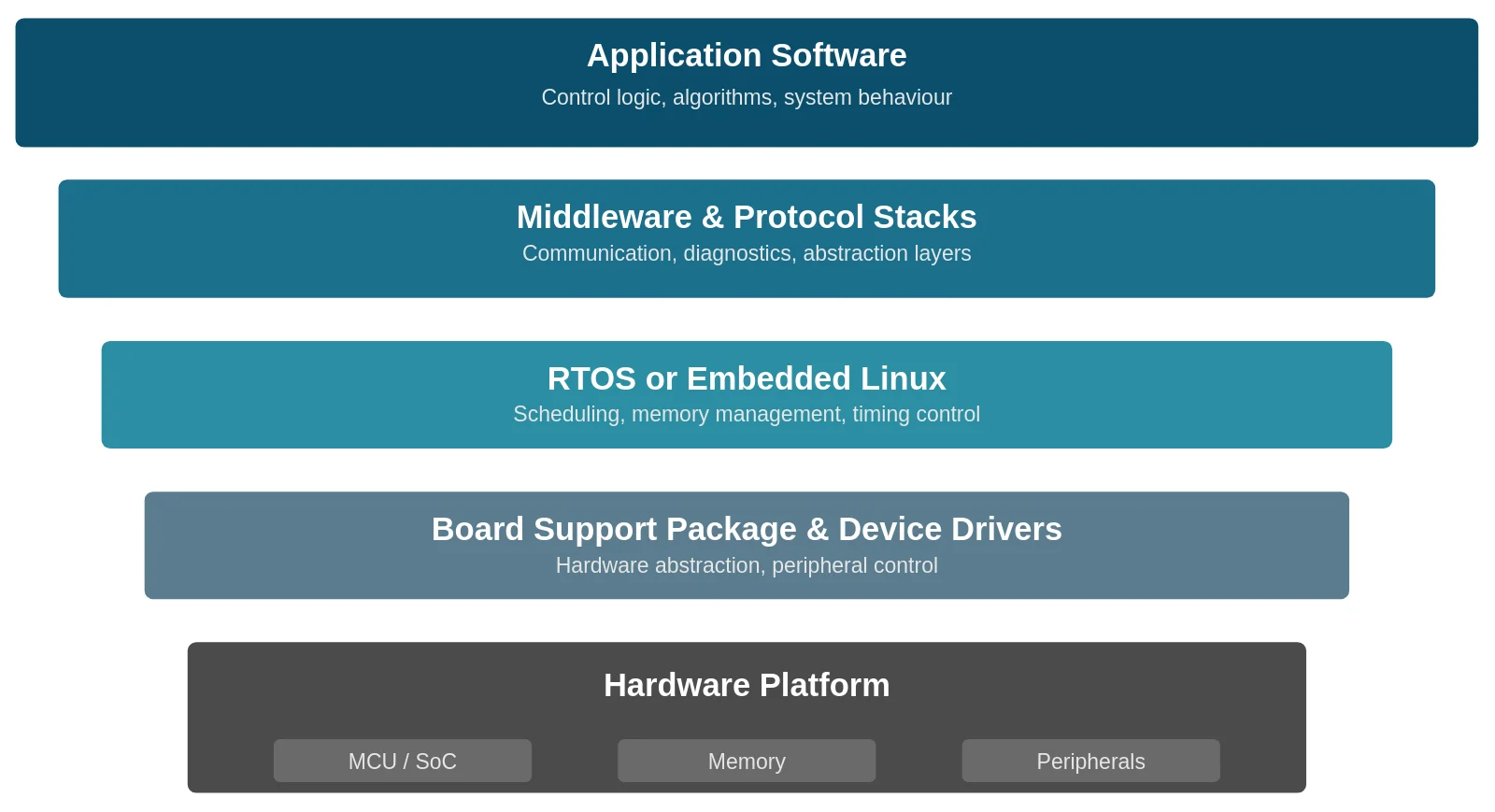
Figure 2: Modern embedded software stack and architectural layering
Key design considerations typically include:
- System partitioning, deciding what belongs in hardware, firmware, OS layers, and application code, and what that implies for observability and control
- Hardware–software interaction, including drivers, interrupts, DMA, bus contention, and timing dependencies that affect behaviour under load
- Real-time behaviour, where predictability matters as much as average performance, especially across operating modes and fault conditions
- Scalability and maintainability, so future features do not destabilise established behaviour or create integration debt
The design goal is not only to make it work. It is to make behaviour predictable, testable, and supportable. Done well, design choices reduce integration friction and make validation evidence achievable without heroic late-stage effort.
Testing Embedded Software
Teams often underestimate how quickly embedded software testing becomes a system problem rather than a test problem. Once timing, hardware state, and integration behaviour interact, conventional test approaches begin to break down. Issues become intermittent, reproduce only under specific load, or depend on the order of events rather than the input values.
Embedded software development and testing operate as an iterative system rather than a linear sequence, with architectural intent continuously refined through implementation, integration, and system validation. Operational feedback from field behaviour, defects, and regression outcomes feeds directly back into architectural and design decisions, reducing late-stage integration and validation risk.
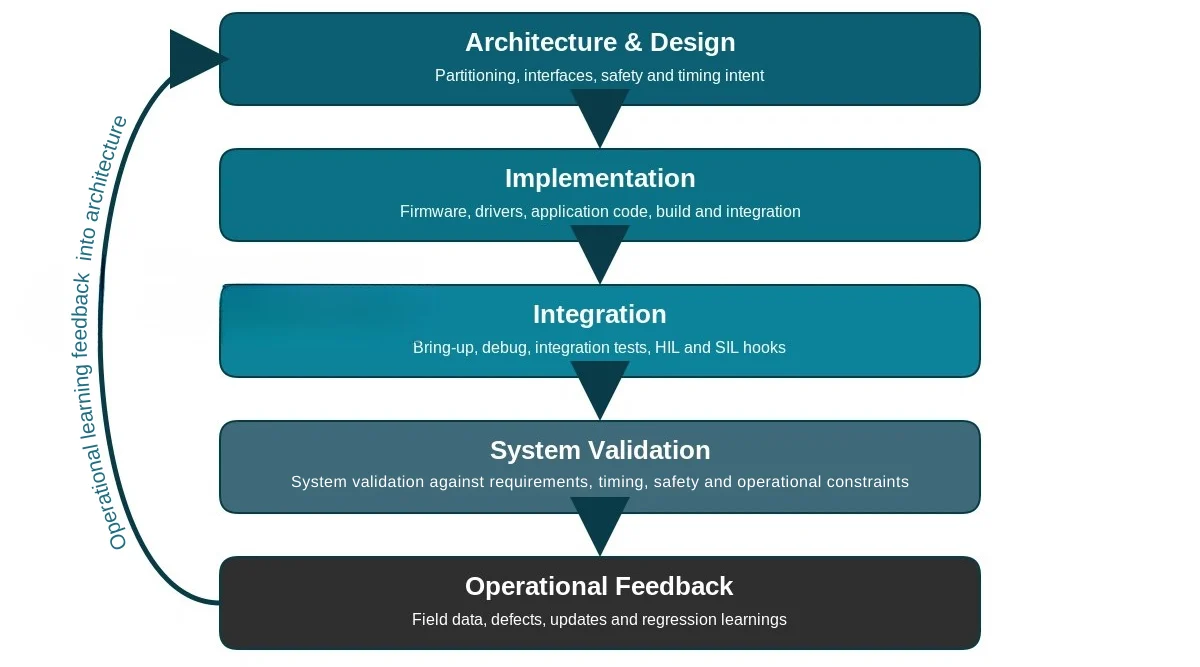
Figure 3: Iterative embedded software development and validation flow
Embedded software validation is particularly sensitive to:
- Timing behaviour and concurrency, including interrupt activity and scheduling effects
- Hardware state and peripheral interaction, where behaviour changes with configuration and operating conditions
- Environmental and operational conditions, such as temperature, power variation, RF conditions, and sensor noise
- System-level fault propagation, where a local issue triggers unexpected behaviour elsewhere
Effective testing, therefore, needs to cover more than functional correctness. It must address boundary conditions, stress scenarios, and behaviour under integration and operational modes. A structured testing strategy supports validation across the lifecycle, from early bring-up and integration through to system qualification. When testing is left to the last minute, programmes do not just find more defects. They lose time triaging issues, reproducing failures, and managing risk across dependencies, which is usually the most expensive phase.
The Impact of AI on Embedded Software Design and Testing
AI is increasingly used to support embedded software workflows, particularly in analysis and automation. Used well, it can reduce manual effort in areas that produce large volumes of data and repetitive triage.
In practical terms, AI can assist with:
- Analysing large volumes of test logs, traces, and telemetry
- Detecting patterns in behavioural anomalies across builds and environments
- Supporting optimisation and prioritisation in validation pipelines
However, embedded software is also where determinism, predictability, and explainability remain non-negotiable, especially in safety-related or real-time systems. AI output still needs engineering interpretation, and any automation introduced into validation must be traceable and defensible. The best results come when AI is treated as a support capability for engineering judgement, not a substitute for it.
Contact and Engagement
Organisations typically seek support on embedded software when a system is scaling in complexity, moving into safety-related constraints, or struggling with integration and validation confidence. In many cases, the immediate need is not “more tests”, but a clearer view of risk, evidence gaps, and where programme time is being lost.
To discuss embedded software design and testing in your system context, you can book a meeting via Calendly or contact the Alpinum team.
Closing perspective
Embedded software is a critical determinant of system success, and its risks tend to surface late if they are not made visible early. Treating design and testing as a disciplined system engineering activity improves predictability, reduces late-stage churn, and supports reliable delivery across the full operational lifecycle.

Written by : Mike Bartley
Mike started in software testing in 1988 after completing a PhD in Math, moving to semiconductor Design Verification (DV) in 1994, verifying designs (on Silicon and FPGA) going into commercial and safety-related sectors such as mobile phones, automotive, comms, cloud/data servers, and Artificial Intelligence. Mike built and managed state-of-the-art DV teams inside several companies, specialising in CPU verification.
Mike founded and grew a DV services company to 450+ engineers globally, successfully delivering services and solutions to over 50+ clients.
Mike started Alpinum in April 2025 to deliver a range of start-of-the art industry solutions:
Alpinum AI provides tools and automations using Artificial Intelligence to help companies reduce development costs (by up to 90%!) Alpinum Services provides RTL to GDS VLSI services from nearshore and offshore centres in Vietnam, India, Egypt, Eastern Europe, Mexico and Costa Rica. Alpinum Consulting also provides strategic board level consultancy services, helping companies to grow. Alpinum training department provides self-paced, fully online training in System Verilog, UVM Introduction and Advanced, Formal Verification, DV methodologies for SV, UVM, VHDL and OSVVM and CPU/RISC-V. Alpinum Events organises a number of free-to-attend industry events
You can contact Mike (mike@alpinumconsulting.com or +44 7796 307958) or book a meeting with Mike using Calendly (https://calendly.com/mike-alpinumconsulting).
Stay Informed and Stay Ahead
Latest Articles, Guides and News
Explore related insights from Alpinum that dive deeper into design verification challenges, practical solutions, and expert perspectives from across the global engineering landscape.