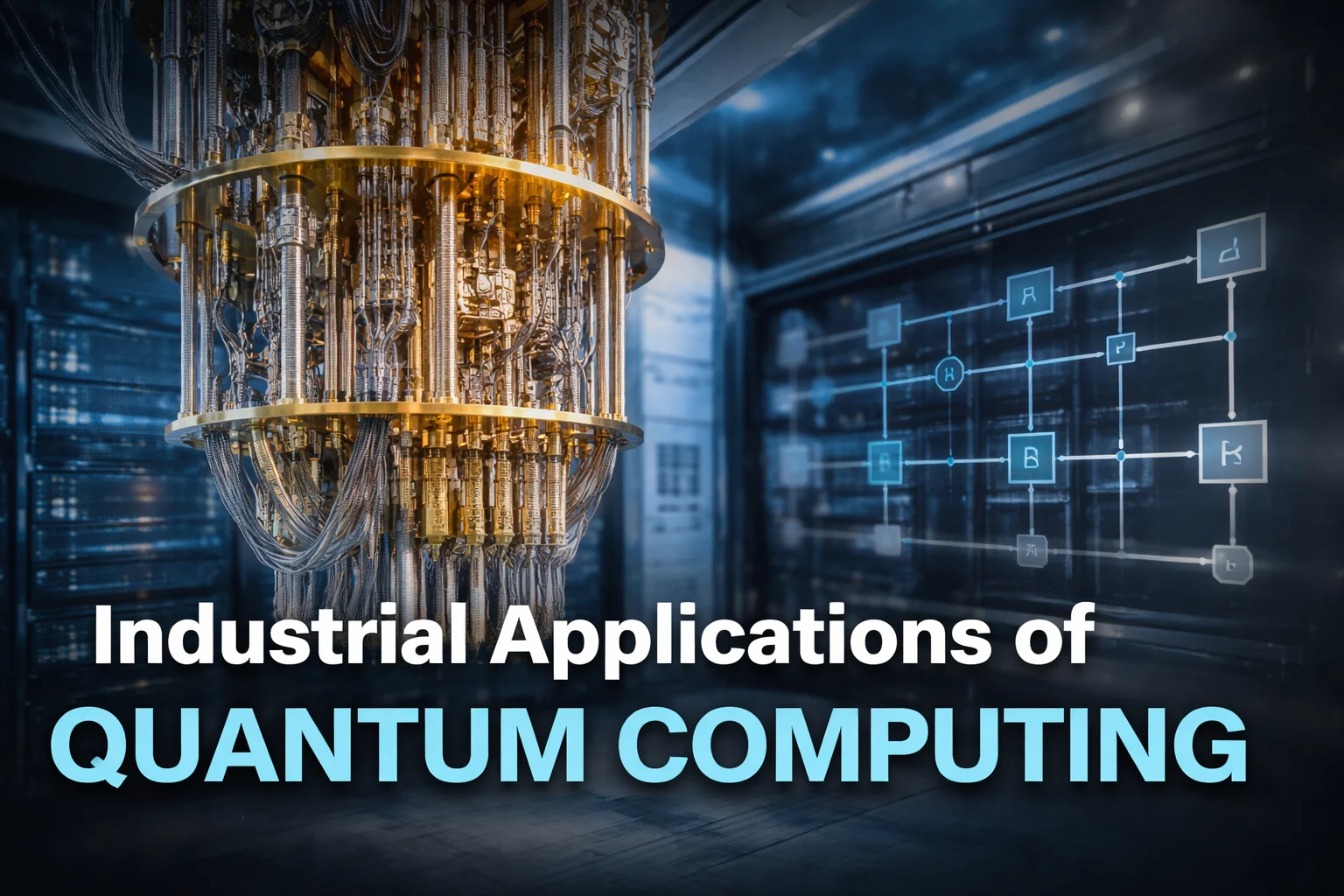
- Quantum chips are the core processors for quantum computers, using “qubits” (Quantum Bits) instead of classical bits, which can exist in states of 0, 1, or both (superposition) to solve complex problems by analysing many solutions in parallel by leveraging quantum entanglement.
- Key Concepts
- Qubits: Use quantum properties to be 0, 1, or both simultaneously using superposition.
- Superposition: Allows qubits to represent multiple states at once, enabling massive parallel processing.
- How They Work
- Qubit Creation: Qubits are realised using trapped ions, photons, or electrons in superconducting materials.
- Control: Electric and magnetic fields manipulate these qubits to perform calculations.
- Processing: Leverages superposition and entanglement to explore vast solution spaces simultaneously, outperforming classical computers for specific problems (e.g., drug discovery, cryptography).
- Types of Qubits & Chips
- Semiconductor-based: Uses silicon.
- Photonic: Uses particles of light (photons).
- Trapped Ions/Atoms: Uses individual atoms or ions.
- Challenges:
- Chips are often cooled to near absolute zero (milliKelvin) to minimise noise and maintain delicate quantum states.
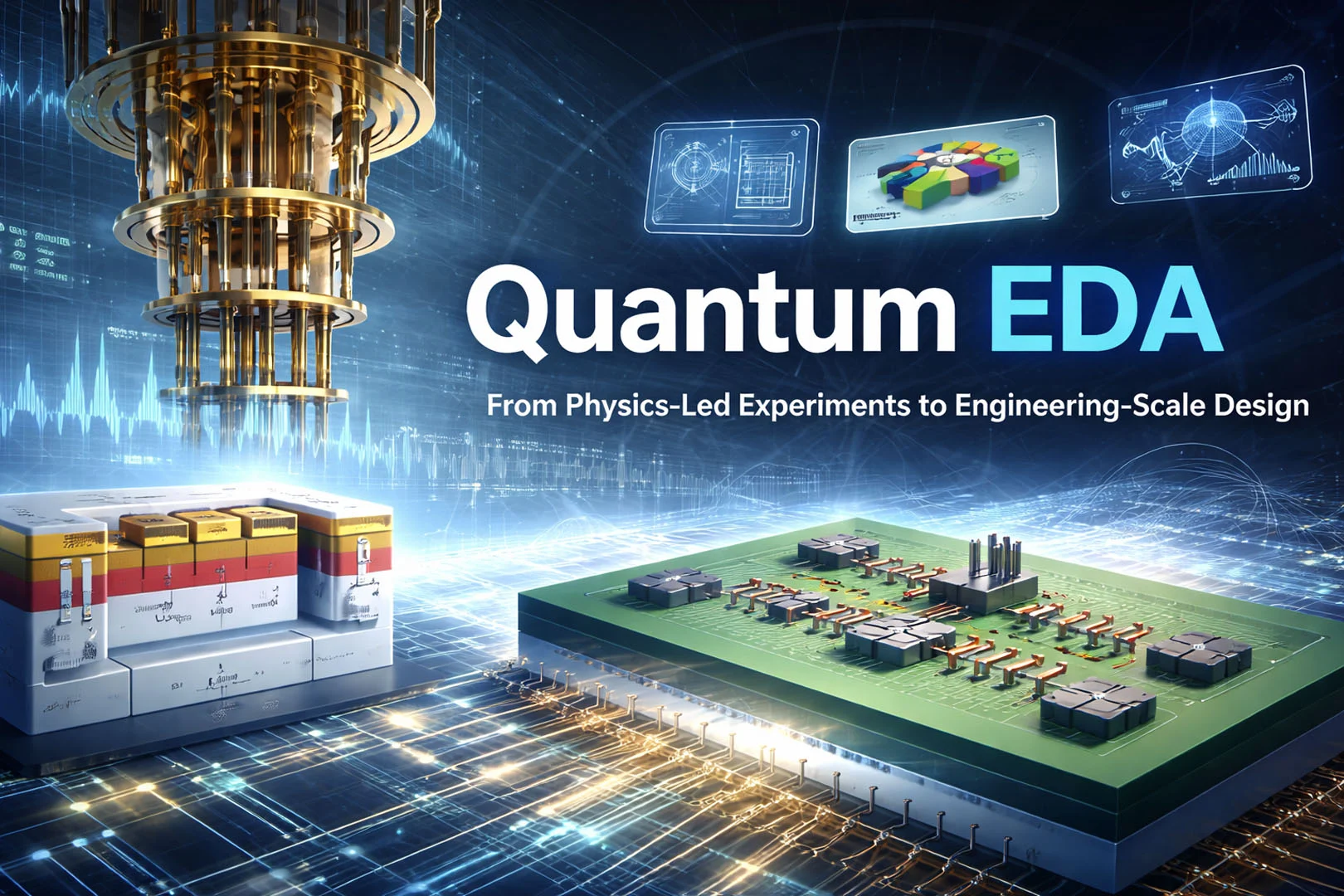
Quantum EDA: From Physics-Led Experiments to Engineering-Scale Design
Introduction: Why Quantum Hardware Needs EDA Discipline Quantum computing hardware [...]