

Introduction
Engineering organisations invest heavily in technical expertise, design capability, and verification discipline. However, project success rarely depends on technical capability alone. It also depends on engineering communication. Large engineering programmes involve interactions between design engineers, verification teams, system architects, programme managers, and customers. These interactions require complex technical information to be understood by people with different priorities and decision responsibilities.
When communication lacks clarity, engineering teams encounter problems that appear later in the project lifecycle. Requirements may be misunderstood. Design assumptions may remain implicit. Verification results may not clearly indicate project risk. Clear technical communication for engineers therefore acts as a multiplier for engineering capability. It ensures that technical analysis leads to aligned decisions, timely actions, and reduced project risk.
As outlined in the Alpinum engineering communication training, engineering excellence alone does not guarantee project success. Projects depend on communication between engineers, managers, and clients to maintain alignment and trust.
Key Learning Points
| Key learning point | Link to detailed explanation | External reference |
| Engineering expertise only delivers impact when decisions are clearly communicated | Communication converts expertise into impact | [1] |
| Poor communication introduces technical risk through misunderstandings and rework | The cost of poor communication in engineering projects | [2] |
| Engineers must structure communication around issues, evidence, and decisions | Structured communication for engineering decisions | [3] |
| Different stakeholders require different levels of technical detail | Audience-aware technical communication | [4] |
| Visual communication often conveys engineering relationships faster than text | Visual communication in engineering | [5] |
Communication Converts Expertise into Impact
Engineering teams generate value through analysis, design, and problem solving. However, the outcome of that work depends on how clearly the results are communicated.
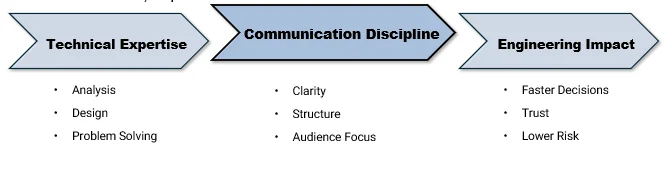
Figure 1: Communication as the link between expertise and engineering impact
Figure 1 illustrates a simple but important concept: communication discipline acts as the conversion layer between technical expertise and engineering impact. Without communication discipline:
- Technical insights remain isolated within teams
- Stakeholders struggle to understand implications
- Decisions slow down or become misaligned
The diagram illustrates this relationship directly: technical expertise combined with communication discipline produces engineering impact. In practice, engineers often produce excellent analysis but present it in ways that do not clearly highlight the decision that needs to be made. Effective structured engineering communication ensures that:
- The problem is clearly defined
- The technical evidence is visible
- The impact is understood
- The required decision is explicit
When these elements are present, engineering expertise can influence outcomes across the organisation.
The Cost of Poor Communication in Engineering Projects
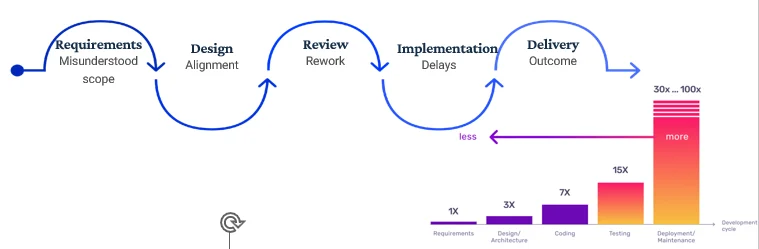
Figure 2: How communication failures propagate through engineering programmes
Communication failures rarely appear immediately. Instead, they propagate through the engineering lifecycle and surface later as rework, schedule slips, or verification failures. Figure 2 shows how communication issues introduced early in the project can cascade through later phases such as design, review, and implementation.
Common communication failures include:
- Unclear or incomplete requirements definitions
- Implicit design assumptions
- Ambiguous review conclusions
- Inconsistent terminology between teams
- Undocumented engineering decisions
These issues often become visible during integration or verification, where correcting them is significantly more expensive. From a systems perspective, communication failures represent a form of engineering risk. They introduce uncertainty into design interpretation, implementation decisions, and verification expectations. Clear engineering communication skills therefore improve project predictability by ensuring that critical information moves reliably between teams.
Structured Communication for Engineering Decisions
One of the most effective improvements engineers can make is to structure communication around decisions rather than information. Many technical updates contain detailed analysis but do not clarify the required action.
A practical structure for decision-focused engineering communication is:
- Situation – What problem or context exists
- Analysis – What technical evidence supports the conclusion
- Current Impact – What the consequences are if nothing changes
- Recommendation – What action should be taken
- Revised Impact – What outcome the decision will enable
This structure aligns engineering communication with how organisations actually operate. Most stakeholders need to understand:
- The problem
- The risk
- The decision
- The expected outcome
Clear structuring also improves communication across teams working at different abstraction levels, including system architecture, verification planning, and programme management.
Audience-Aware Technical Communication
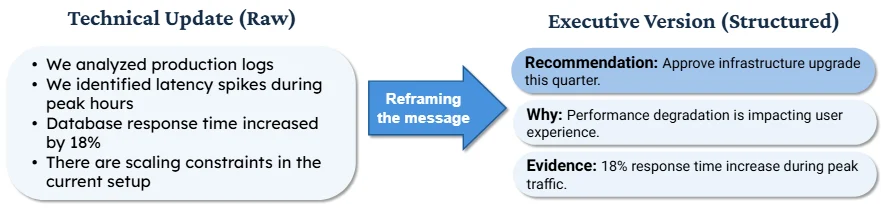
Figure 3: Adapting engineering communication to different audiences
Engineering teams typically communicate in a bottom-up analytical structure. They begin with data and reasoning before presenting conclusions. However, senior stakeholders often interpret information in the opposite order. They begin with the decision, followed by the supporting evidence.
This difference in communication structure can create misunderstandings even when the underlying analysis is correct. The example demonstrates how the same technical findings can be presented either as a raw technical update or as a decision-focused explanation.
Different audiences also prioritise different information:
| Audience | Primary focus |
| Engineering peers | technical accuracy and design details |
| Managers | progress, schedule, and resources |
| Clients | outcomes, reliability, and risk |
Effective clear communication in engineering teams therefore requires engineers to adjust how information is presented while maintaining technical accuracy.
Visual Communication in Engineering
Engineering information is often complex and data-heavy. Diagrams and visual models frequently communicate relationships faster than written explanations.
Visual communication can help engineers:
- Explain system architecture
- Highlight dependencies between components
- Illustrate verification flows
- Expose performance trends or anomalies
For complex technical topics such as SoC verification, FPGA design flows, or distributed system architecture, visual representations reduce cognitive load and help stakeholders interpret information more quickly. However, diagrams must still follow communication discipline. They should highlight the key message rather than overwhelm the reader with detail.
Communication Discipline in Engineering Meetings
Meetings are a primary mechanism through which engineering teams coordinate decisions. However, many meetings fail to deliver value because they lack clear communication structure. Effective engineering meetings typically follow three phases:
Before the meeting
- Define the objective
- Identify decisions required
- Prepare a concise summary of the issue
During the meeting
- State the purpose within the first minutes
- Separate technical explanation from decision points
- Confirm ownership for actions
After the meeting
- Summarise conclusions
- Confirm responsibilities
- Record next steps
Structured communication ensures that meetings support engineering execution rather than simply sharing information.
AI Assistance in Engineering Communication
Recent advances in AI-assisted writing tools allow engineers to accelerate communication tasks.
AI tools can assist with:
- Drafting technical summaries
- Refining presentation language
- Organising reports and documentation
- Summarising long technical discussions
However, AI should support communication rather than replace engineering judgement. Engineers remain responsible for:
- Technical accuracy
- Context interpretation
- Engineering decisions
Used appropriately, AI can reduce administrative workload and allow engineers to focus more on analysis and system thinking.
Communication as a Strategic Engineering Capability
Engineers often view communication as a secondary skill compared to design or analysis. In reality, communication determines whether technical insight influences decisions. Clear communication allows engineering teams to:
- Accelerate project delivery
- Reduce misunderstandings and rework
- Improve stakeholder alignment
- Highlight technical risks early
- Support confident decision-making
Engineering expertise produces solutions. Engineering communication ensures those solutions are understood, trusted, and implemented. For engineers working on complex programmes, communication discipline is therefore not optional. It is a core professional capability.
Further Learning
Engineers who want to strengthen their engineering communication skills can explore structured training designed specifically for technical professionals.
Advanced Communication Skills Training for Engineers focuses on:
- Communicating complex technical ideas clearly
- Structuring technical reports and presentations
- Adapting messages for different audiences
- Using visuals and AI tools to improve clarity
More details and registration are available here:
https://www.tickettailor.com/events/alpinumconsulting/2092388
References
[1] IEEE – Engineering professional resources
https://www.ieee.org
[2] International Council on Systems Engineering–Systems engineering professional body
[3] Project Management Institute – Communication in project management
https://www.pmi.org
[4] INCOSE Systems Engineering Body of Knowledge
https://www.sebokwiki.org
[5] Nielsen Norman Group – Visual communication principles
https://www.nngroup.com

Written by : Mike Bartley
Mike started in software testing in 1988 after completing a PhD in Math, moving to semiconductor Design Verification (DV) in 1994, verifying designs (on Silicon and FPGA) going into commercial and safety-related sectors such as mobile phones, automotive, comms, cloud/data servers, and Artificial Intelligence. Mike built and managed state-of-the-art DV teams inside several companies, specialising in CPU verification.
Mike founded and grew a DV services company to 450+ engineers globally, successfully delivering services and solutions to over 50+ clients.
Mike started Alpinum in April 2025 to deliver a range of start-of-the art industry solutions:
Alpinum AI provides tools and automations using Artificial Intelligence to help companies reduce development costs (by up to 90%!) Alpinum Services provides RTL to GDS VLSI services from nearshore and offshore centres in Vietnam, India, Egypt, Eastern Europe, Mexico and Costa Rica. Alpinum Consulting also provides strategic board level consultancy services, helping companies to grow. Alpinum training department provides self-paced, fully online training in System Verilog, UVM Introduction and Advanced, Formal Verification, DV methodologies for SV, UVM, VHDL and OSVVM and CPU/RISC-V. Alpinum Events organises a number of free-to-attend industry events
You can contact Mike (mike@alpinumconsulting.com or +44 7796 307958) or book a meeting with Mike using Calendly (https://calendly.com/mike-alpinumconsulting).
Stay Informed and Stay Ahead
Latest Articles, Guides and News
Explore related insights from Alpinum that dive deeper into design verification challenges, practical solutions, and expert perspectives from across the global engineering landscape.